To provide the best experiences, we use technologies like cookies to store and/or access device information. Consenting to these technologies will allow us to process data such as browsing behaviour or unique IDs on this site. Not consenting or withdrawing consent, may adversely affect certain features and functions.
The technical storage or access is strictly necessary for the legitimate purpose of enabling the use of a specific service explicitly requested by the subscriber or user, or for the sole purpose of carrying out the transmission of a communication over an electronic communications network.
The technical storage or access is necessary for the legitimate purpose of storing preferences that are not requested by the subscriber or user.
The technical storage or access that is used exclusively for statistical purposes.
The technical storage or access that is used exclusively for anonymous statistical purposes. Without a subpoena, voluntary compliance on the part of your Internet Service Provider, or additional records from a third party, information stored or retrieved for this purpose alone cannot usually be used to identify you.
The technical storage or access is required to create user profiles to send advertising, or to track the user on a website or across several websites for similar marketing purposes.

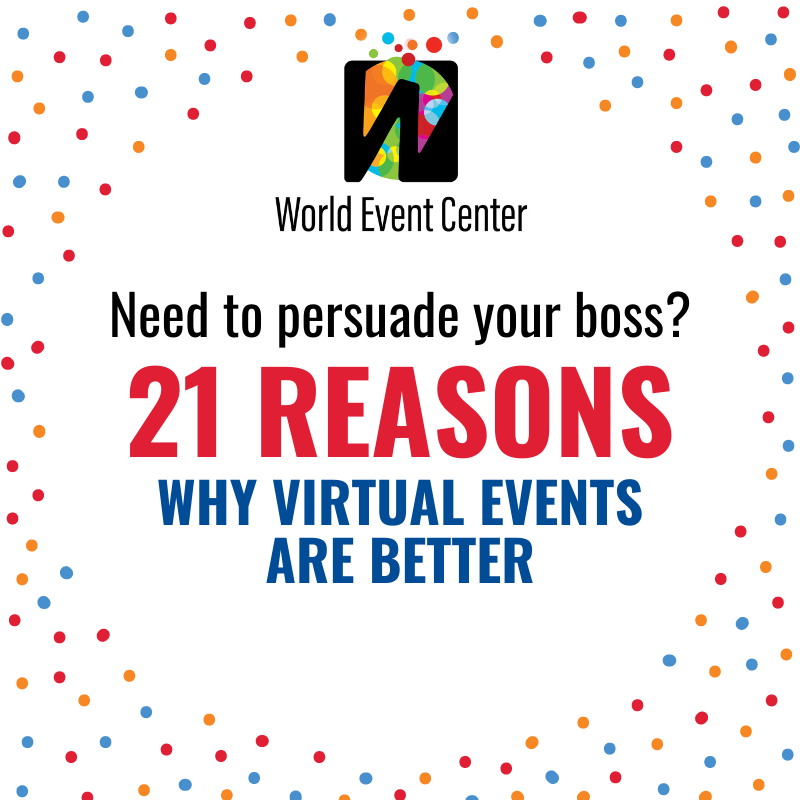
Virtual events have several advantages over in-person events, especially in today’s digital age. Here are some reasons why virtual events can be better:
Cost-effective: Hosting a virtual event is generally more cost-effective than hosting an in-person event. There are no costs associated with renting a physical space, travel, lodging, catering, or other expenses associated with in-person events.
Accessibility: Virtual events can be accessed from anywhere in the world, as long as attendees have an internet connection. This makes it easier to connect with people from around the world, and to reach a larger audience.
Increased flexibility: Virtual events offer more flexibility in terms of scheduling, as they can be hosted at any time of day or night, and can be accessed from any location. This makes it easier for attendees to participate, regardless of their schedule or location.
Environmentally friendly: Virtual events have a smaller environmental impact than in-person events, as they do not require travel or the use of physical resources.
Greater engagement: Virtual events can be more engaging than in-person events, as they offer a range of interactive features such as live polls, Q&A sessions, and virtual networking opportunities. This can make attendees feel more connected to the event and to each other.
Greater data and analytics: Virtual events can provide greater insights into attendee behavior and engagement, as they can track metrics such as attendance rates, time spent in sessions, and interaction rates.
Overall, virtual events offer many advantages over in-person events, and are becoming increasingly popular as a way to connect with audiences in today’s digital age.