
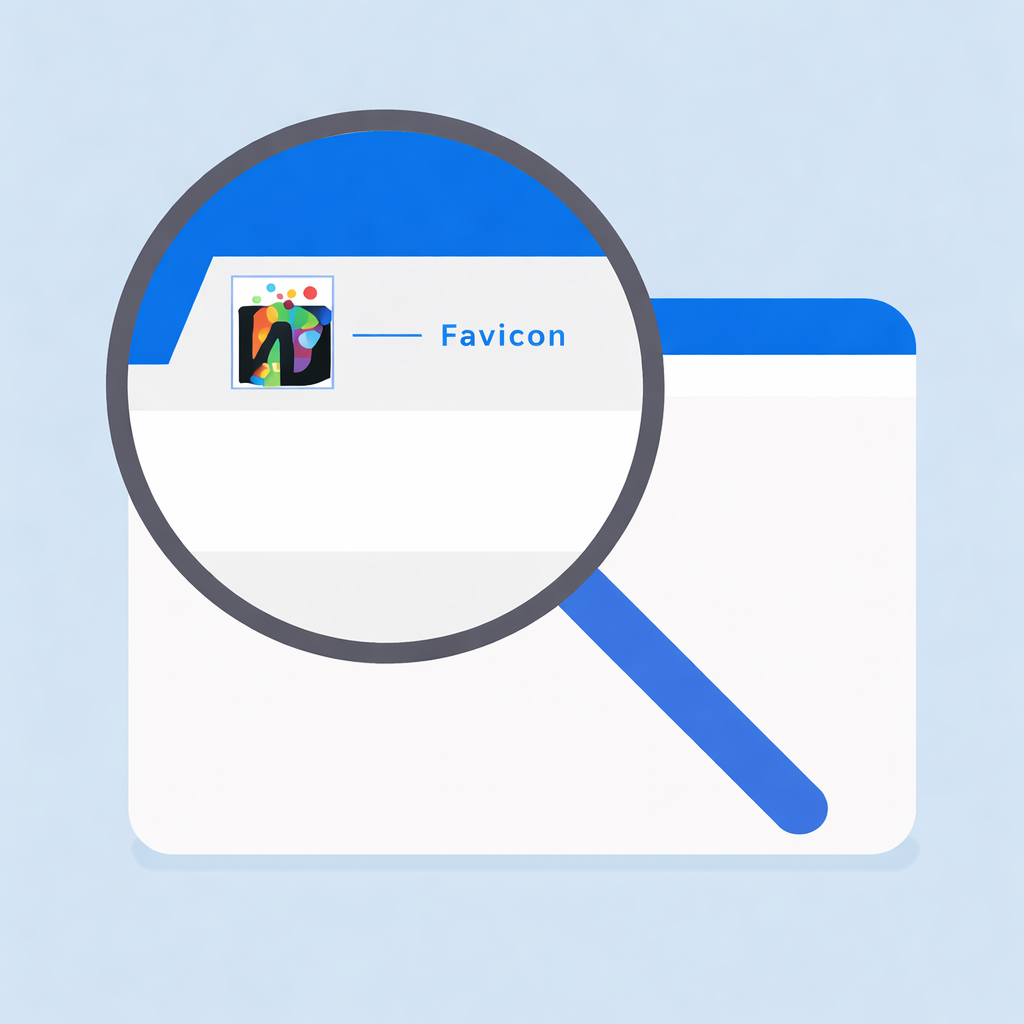
 Ever look at the top of your web browser and see fifty different tabs open? It’s a mess. But notice how you can find Google, Amazon, or Facebook instantly just by looking at those tiny little pictures? Those tiny squares are called Favicons (short for “favorite icons”).
Even though they are smaller than a ladybug, they do a massive job. They act like a lighthouse, guiding customers back to your website when they get lost in “The Tab Jungle.”
If you don’t have one, your site looks like a “blank page,” which makes people wonder if your business is even real. Adding one is a quick win. In fact, there are 101 free or almost free ways to promote your brand online—and this is one of the easiest.
Where does it show up?
- Browser Tabs: Next to your website’s name.
- Bookmarks: In the list of “saved sites” on someone’s computer.
- Search Results: When people look you up on Google, your icon shows up right next to your link.
- Phone Home Screens: If a customer saves your site to their phone, it looks just like an app icon.
When should you do this?
Right now. If you have a website but don’t have a favicon, you’re leaving a “For Rent” sign on your front door. It only takes a few minutes to fix, and it lasts forever.
How do you get one?
You don’t need to be a computer genius or a fancy artist.
- Make it: Use a free tool like favicon.io to turn your logo or even a single letter into an icon.
- Keep it simple: At this size, details disappear. Use one bold color and one simple shape.
- Put it on your site: You just upload the file to your website’s main folder (the place where all your site’s files live).
- Add the “Address”: You paste one tiny line of code into the “Settings” area (or the “Header”) of your website so the internet knows where to find the image.
Why bother?
It’s all about trust. When a customer sees that tiny icon, they subconsciously think: “This business is professional. They care about the details. I feel safe buying from them.” It turns a “random website” into a Brand.